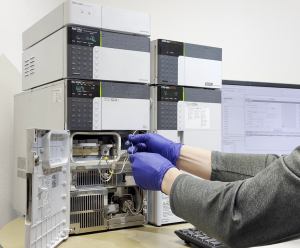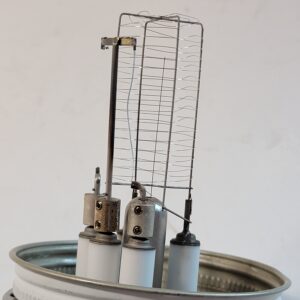

Get a direct offer from a buyer who understands scientific instruments
If you are searching “sell my lab equipment,” you probably have one of three problems: equipment is taking up space, nobody internally wants to manage the resale process, or you are not sure whether the instruments are worth anything at all.
Lab Liquidators LLC buys used, surplus, untested, incomplete, and sometimes non-working laboratory equipment directly. We work with universities, research labs, manufacturers, startups, surplus departments, and technical facilities that need a practical way to turn idle equipment into cash without running an auction or becoming an equipment dealer.
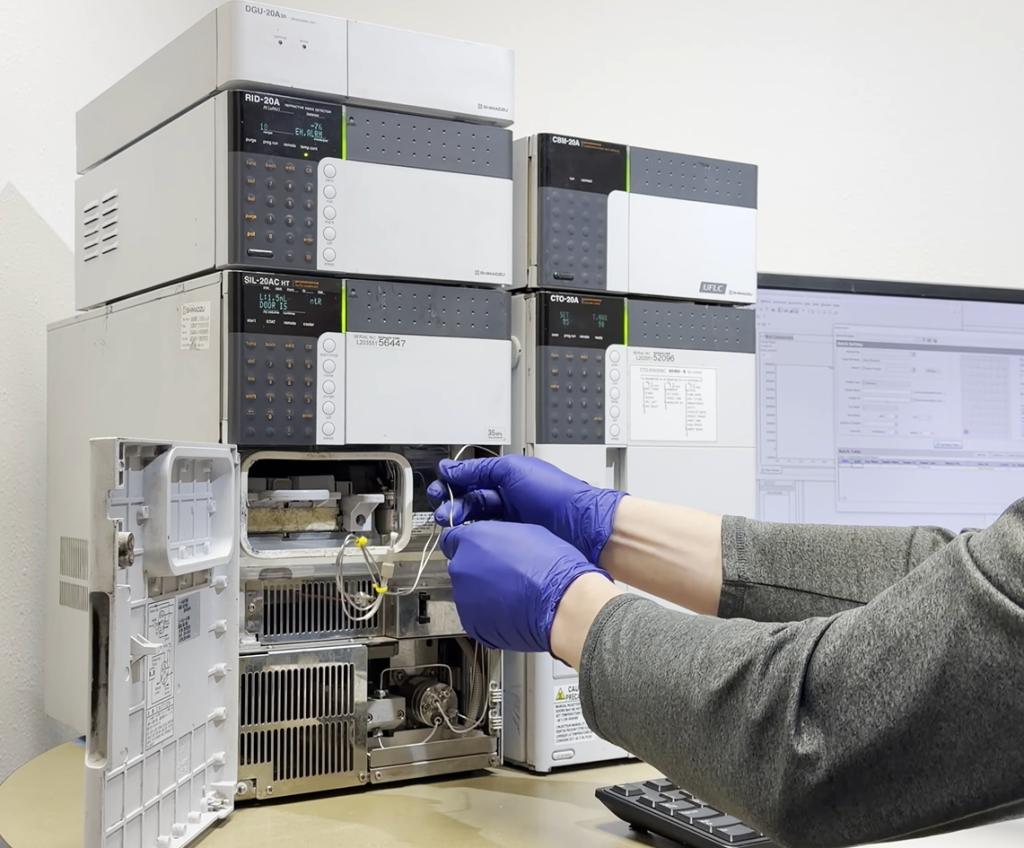
Send photos, model numbers, condition notes, and the pickup location. We will review the equipment, tell you whether it is a fit, and make a direct purchase offer when the resale and logistics picture makes sense.
Request an offer for your lab equipment
Or call 507-316-4174
The short version
We buy lab equipment outright. We are not an auction platform, not a consignment-only marketplace, and not a generic junk removal company.
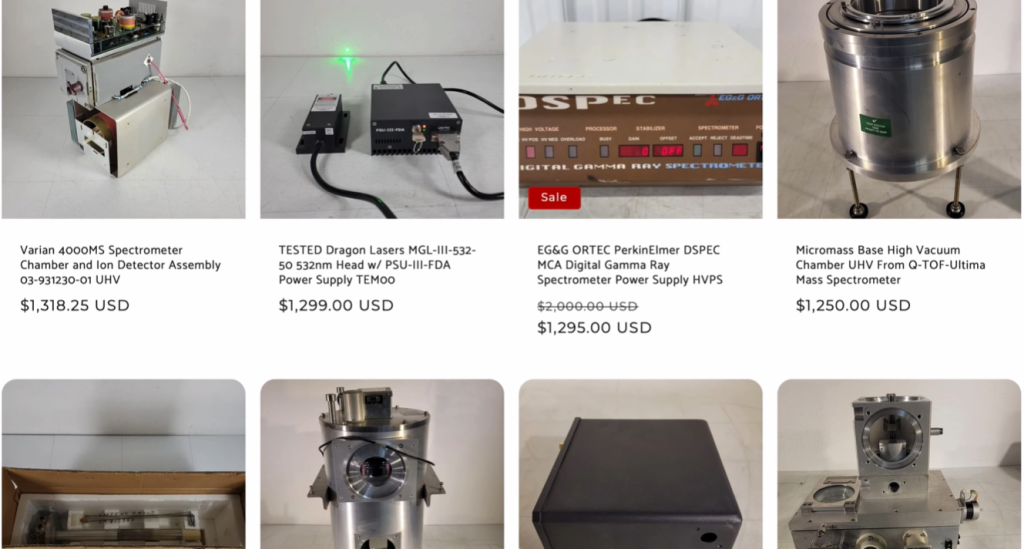
We are usually most interested in scientific instruments, analytical equipment, vacuum hardware, optics, electronics, test equipment, lab automation, specialty parts, and complete or partial systems with real resale or parts value.
We are usually less interested in commodity furniture, ordinary office equipment, patient-use medical devices, hazardous materials, expired consumables, or items where freight costs exceed likely resale value.
That sounds blunt because it should be. The fastest way to get a useful answer is to send the details and let us separate “valuable,” “maybe,” and “not worth moving.”
Why sell to Lab Liquidators instead of listing it yourself?
Selling laboratory equipment is weirdly high-friction. A buyer will ask whether the detector works, whether the pump hits pressure, whether the software license is included, whether the controller matches the head, whether the optics are clean, whether the system was decontaminated, whether freight is safe, and whether the accessories in the photos are included.
If you list it yourself, all of that becomes your problem.
Lab Liquidators buys equipment for resale, refurbishment, parts recovery, and technical redistribution. A direct sale is usually not the theoretical maximum price; it is the cleaner path when you care about speed, certainty, and less internal hassle.
A direct sale is a good fit when you want:
- A real purchase offer instead of an open-ended auction result
- Less staff time spent photographing, listing, packing, and answering technical questions
- A buyer who can evaluate odd scientific equipment and not just “lab stuff” generically
- Help coordinating pickup, freight, palletizing expectations, or facility removal details
- A candid answer about what is worth selling and what probably is not
What used lab equipment do we buy?
We buy a broad range of used laboratory and scientific equipment. Working condition helps, but it is not the only path to value. Many instruments still have resale value as untested units, parts systems, repair candidates, or sources of desirable accessories.
Analytical and measurement instruments
Spectrometers, spectrophotometers, detectors, HPLC modules, GC systems, autosamplers, fraction collectors, balances, thermal analyzers, particle analyzers, oil analyzers, refractive index detectors, AFM systems, SEM or TEM microscopes, fluorescence instruments, photometers, and related accessories.
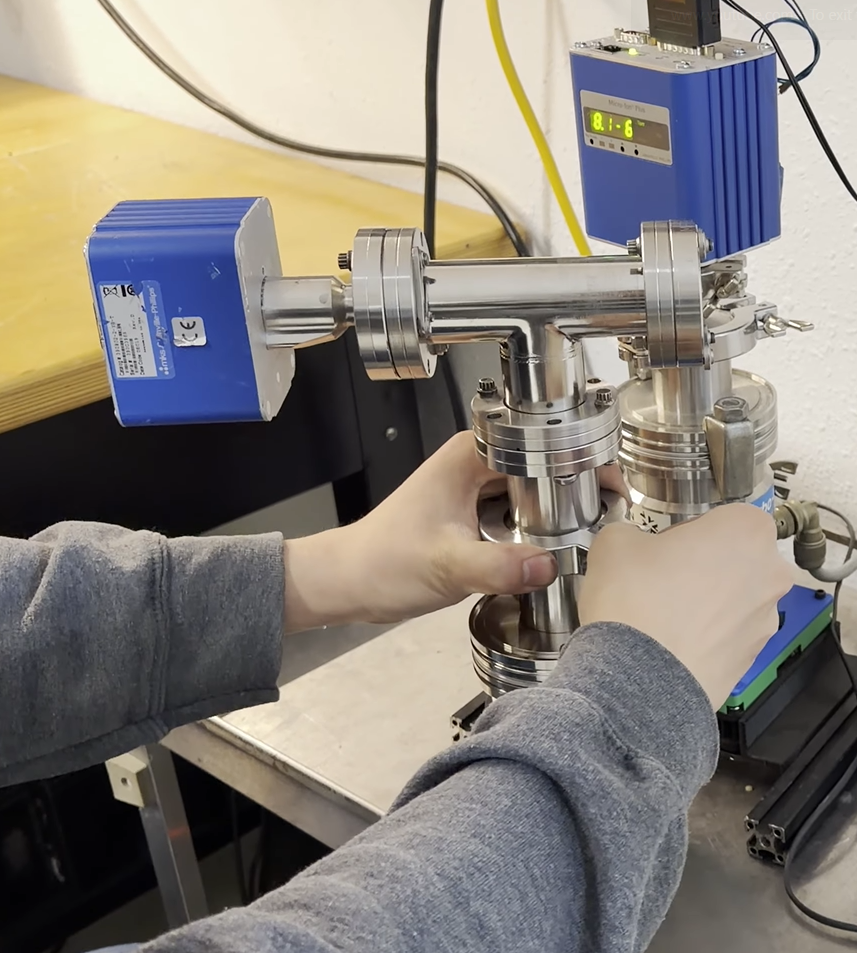
Vacuum, high vacuum, and UHV equipment
Turbo pumps, roughing pumps, scroll pumps, diaphragm pumps, vacuum chambers, ion gauges, cold cathode gauges, Pirani gauges, capacitance manometers, controllers, valves, feedthroughs, CF/KF/ISO flanges, adapters, bellows, traps, and vacuum fittings.
Optics, lasers, and microscopy
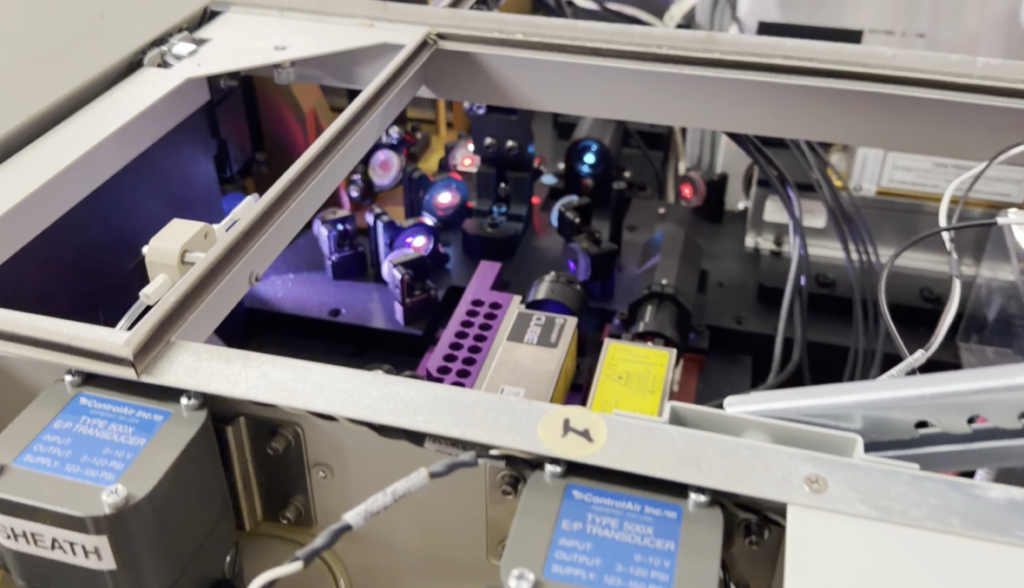
Microscopes, microscope parts, objectives, optical tables, optical mounts, translation stages, lasers, laser power supplies, spectrometers, cameras, lenses, mirrors, filters, fiber optics, photonics hardware, and motion components.
General laboratory equipment
Centrifuges, incubators, ovens, vacuum ovens, shakers, water baths, chillers, recirculators, freeze dryers, refrigerators, freezers, stir plates, hot plates, glassware, balances, glove boxes, power supplies, and test equipment.
Electronics, industrial, and scientific support equipment
Controllers, circuit boards, modules, sensors, motors, drives, robotics parts, cables, specialty power supplies, data acquisition hardware, process equipment, fixtures, probes, and replacement parts.
We may buy equipment other buyers ignore
A lot of useful lab equipment falls into the annoying middle: too specialized for local buyers, too technical for a general liquidator, too heavy for easy online sales, and too valuable to scrap casually.
That is often where Lab Liquidators can help.
We will consider:
- Working instruments with accessories
- Untested surplus equipment
- Incomplete systems
- Older models with active parts demand
- Equipment with known faults
- Parts units
- Controller/head/pump/accessory bundles
- Bulk lots of scientific parts and support equipment
- Lab cleanout lots with a mix of valuable and low-value items
A system does not need to be perfect.
What makes lab equipment worth more?
Used lab equipment value is not just “original price minus age.” Some instruments that cost a fortune when bought new have almost no used-market demand. Some tiny obsolete module, detector, board, pump, controller, objective, or adapter may be worth real money because it keeps an older system alive.
We look at:
- Manufacturer and exact model number
- Configuration and options
- Working status
- Completeness
- Included accessories, probes, pumps, heads, cables, manuals, computers, dongles, and software
- Whether the item is clean, decontaminated, and safe to handle
- Cosmetic condition
- Current used-market demand
- Size, weight, fragility, and freight risk
- Whether it is better sold as a system, as parts, or in a bulk lot
The easiest way to improve your offer
Keep the system together. Do not separate the PC computer from the analyzer, controller from the head, the pump from the cable, the spectrometer from the software dongle, the microscope from its objectives, or the chamber from its fittings unless you know exactly what you are doing.
A complete mediocre system is often easier to sell than a pile of orphaned components.
How our selling process works
1. Send photos and basic details
Start with the basics. You do not need a perfect asset list, but clear information helps us give a better answer.
Useful details include:
- Manufacturer and model number
- Photos of the front, nameplate, data tag, and accessories
- Power-on status or known test results
- Known problems, missing parts, or error messages
- Included software, computers, dongles, probes, pumps, cables, manuals, fixtures, or controllers
- Quantity if you have multiple items
- Pickup location
- Timeline for removal
- Any contamination, decontamination, facility, dock, or access constraints
2. We review value and logistics together
We evaluate both resale value and the practical work needed to move the equipment. A valuable item can become unattractive if it is incomplete, risky to ship, buried in a facility, missing critical accessories, or located where pickup costs swamp the resale value.
This is why photos and location matter.
3. We make a direct offer if it fits
If the equipment fits our buying needs, we make a direct purchase offer. For larger lots, we may ask for an asset list, additional photos, video, a walkthrough call, or an on-site review.
4. We coordinate pickup or freight
Once an offer is accepted, we coordinate pickup or freight. Depending on the equipment, that may involve palletizing, dock access, liftgate service, commercial pickup, carrier scheduling, or special handling for fragile instruments.
Single instrument, small lot, or entire lab?
We can review all three.
Single instrument
Send photos, model number, condition, accessories, and location. This is the fastest type of review.
Small equipment lot
Send a rough list or grouped photos. Include any higher-value instruments separately so they do not get lost in the pile.
Larger lab cleanout or facility surplus
Send an asset list if you have one. If not, send room photos, rack photos, bench photos, and closeups of major instruments. We can often triage the lot into high-value, medium-value, parts-value, and low-value categories.
Direct sale vs. auction vs. consignment vs. eBay
There is no universally best way to sell lab equipment. The right path depends on how much work you want to do, how fast it needs to move, and how much uncertainty you can tolerate.
| Method | Best when | Tradeoff |
|---|---|---|
| Direct sale to Lab Liquidators LLC | You want a clear offer and simpler removal | Usually less upside than selling retail yourself |
| Auction | You have a full facility or extreme deadline-driven liquidation | Final pricing is uncertain |
| Consignment | You can wait for the right buyer | Slower payout and commission/fees |
| eBay or marketplace listing | You can photograph, describe, pack, ship, and support the sale yourself | More work, more buyer questions, more return/damage risk |
| Scrap/recycle | Equipment has low resale value or high removal cost | Lowest recovery, but sometimes the right answer |
Our bias: if the equipment is specialized, fragile, heavy, incomplete, or technical enough to create buyer questions, a direct sale may be worth the lower theoretical ceiling.
Equipment we usually do not buy
We generally do not purchase:
- Patient-use medical equipment
- Dental equipment
- Clinical diagnostic equipment intended for patient care
- Controlled substances
- Hazardous chemicals or reagents
- Radioactive materials
- Regulated biological materials
- Expired consumables with limited resale value
- Ordinary office furniture
- Equipment located outside North America
If you are unsure, send the details. A quick “not a fit” is not a problem for us.
Who sells equipment to us?
Lab Liquidators buys from:
- University departments and research groups
- Biotech and pharmaceutical labs
- Materials science and engineering facilities
- Industrial R&D groups
- Analytical labs
- Startups and small manufacturers
- Government and institutional surplus departments
- Equipment dealers and repair shops
- Companies closing, moving, or consolidating lab space
- Individuals who acquired legitimate surplus equipment and want a practical resale path
We are based in Fargo, North Dakota and work with sellers across North America.
Before you submit: a quick seller checklist
You will usually get a better answer if you include:
- At least 3 photos per major item
- Nameplate or serial tag photos
- Model numbers typed out when possible
- Accessory photos
- Any power-on or test photos
- Known issues
- Pickup ZIP code
- Deadline for removal
- Notes about loading access: dock, forklift, stairs, elevator, pallet jack access, or liftgate need
- Any known contamination or decontamination status
For large lots, upload a spreadsheet if you have one. If not, send rough photos first. We can work from imperfect information; we just cannot value what we cannot see.
Ready to sell your lab equipment?
Send us the details. We will tell you whether the equipment is a fit and make a direct offer when it makes sense.
Request an offer from Lab Liquidators
Or call 507-316-4174